Wipro and Google Cloud just launched 200 AI agents. Here’s what enterprises can learn to deploy AI agents at scale without risk

Parul Chouhan
Chief of Staff
Introduction
The launch of 200 AI agents by Wipro and Google Cloud marks one of the largest enterprise-scale rollouts of agentic AI in India. For enterprises, this move highlights both the urgency of adopting AI agents and the playbook needed to scale responsibly. In this blog, we break down what your organization can learn from Wipro’s rollout—and how you and your enterprise can deploy AI agents with minimal disruption and maximum ROI.
Table of Contents
Why Wipro + Google Cloud’s Move Matters
The Rise of AI Agents in Enterprise Workflows
Lessons for Enterprises From the 200-Agent Rollout
Key ROI Metrics Enterprises Should Track
Risks to Avoid When Scaling AI Agents
Actionable Playbook for AI Agent Deployment
Conclusion + CTA
FAQ
1. Why Wipro + Google Cloud’s Move is important
Wipro’s collaboration with Google Cloud to launch 200 AI agents isn’t just a milestone—it’s a signal to enterprises worldwide.
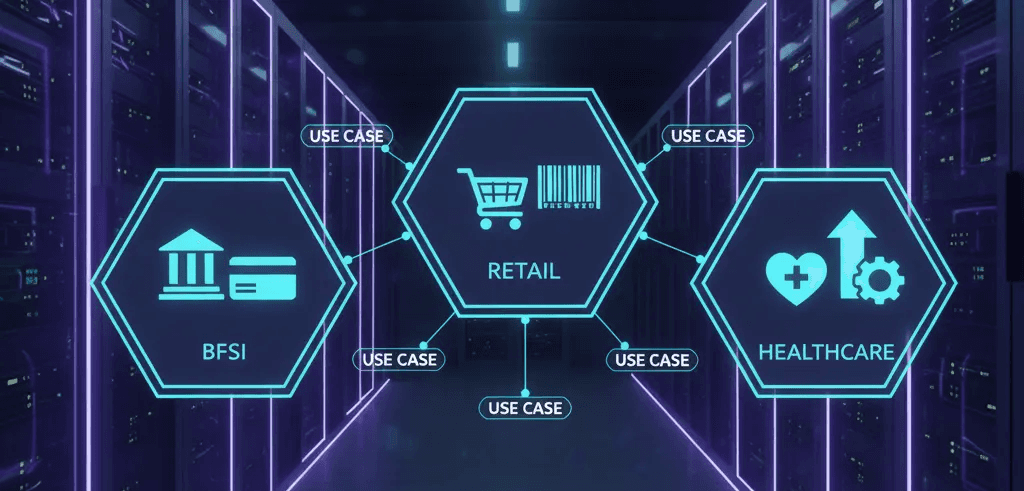
Scale: 200 AI agents working across industries (BFSI, telecom, retail).
Validation: Partnerships with hyperscalers like Google prove AI agents are enterprise-ready.
2. The Rise of AI Agents in Enterprise Workflows
AI agents are no longer just chatbots. They now perform:
Customer service deflection (automating Tier-1 queries).
Process automation (loan underwriting, claims processing, scheduling).
Strategic support (decision intelligence, compliance monitoring).
This shift marks the rise of agentic AI: autonomous, task-oriented agents that plug directly into enterprise systems.
3. Lessons for Enterprises From the 200-Agent Rollout
Wipro’s launch offers three big lessons:
Start with a clear use case – Wipro focused on verticals like BFSI and healthcare where AI agents can immediately cut costs.
Leverage partnerships – Google Cloud's infra accelerates scale and reduces time-to-market.
Think beyond automation – The goal isn't just cost savings, but customer experience transformation.
4. Key ROI Metrics Enterprises Should Track
When deploying AI agents, enterprises must measure impact with tangible KPIs:
ROI Metric | Why is it relevant | Example Impact |
Call Deflection | Shows AI adoption in support | 40% reduction in human calls |
Average Handling Time (AHT) | Measures efficiency | 25% faster resolutions |
Cost-to-Serve | Links AI to operational cost savings | 30% drop per customer interaction |
NPS / CSAT | Tracks CX improvement | 20% higher CSAT in BFSI rollouts |
5. Risks to Avoid When Scaling AI Agents
Not all AI projects succeed. Gartner predicts 40% of agentic AI projects will fail by 2027. Common pitfalls include:
Rushing deployment without governance.
Data silos that prevent accurate AI training.
Compliance blind spots, especially in BFSI and healthcare.
Creating “me-too” without foundational workflows and differentiators
6. Actionable Playbook for AI Agent Deployment
A safe rollout requires a step-by-step playbook:
Audit your workflows → Identify processes ripe for automation.
Run pilots in shadow mode → Test AI alongside human workflows.
Integrate with APIs/Middleware → Ensure legacy compatibility.
Prioritize governance → Enforce compliance & data privacy.
Track ROI continuously → Use metrics like CSAT, deflection rate, and downtime saved.
Want to see how enterprises deploy AI agents safely? Book a Demo with Intelekt AI today.
7. Conclusion
Wipro and Google Cloud’s 200 AI agent rollout proves the enterprise AI race is accelerating. The winners will be those who adopt with discipline, governance, and ROI focus.
Don’t wait until your competitors are ahead—Sign up to explore how AI agents can transform your enterprise workflows.
8. FAQ
Q1. Why is Wipro’s AI agent rollout important for my business? It validates that AI agents can scale across industries, showing enterprises the time to adopt is now.
Q2. How can my enterprise replicate Wipro’s success? Follow a phased integration strategy: start with shadow mode pilots, ensure compliance, and track ROI metrics.
Q3. What industries benefit most from AI agents? BFSI, healthcare, telecom, and retail are early adopters—any industry with high customer volumes and repetitive workflows gains quickly.
Related Posts