Learn how to integrate AI agents into your legacy systems without downtime or data loss. Discover best practices, ROI impact, and a safe integration roadmap.

Parul Chouhan
Chief of Staff
Table of Contents
Introduction: The Enterprise Challenge
Why Legacy Systems Struggle With AI Adoption
Key Risks: Downtime, Data Loss & Compatibility
The AI Agent Integration Roadmap (Step-by-Step)
ROI Metrics to Track During Integration
Industry Use Cases: BFSI, Healthcare, Retail
Best Practices for Zero-Disruption AI Integration
FAQs on Integrating AI Agents With Legacy Systems
Conclusion + CTA
1. Introduction: The Enterprise Challenge
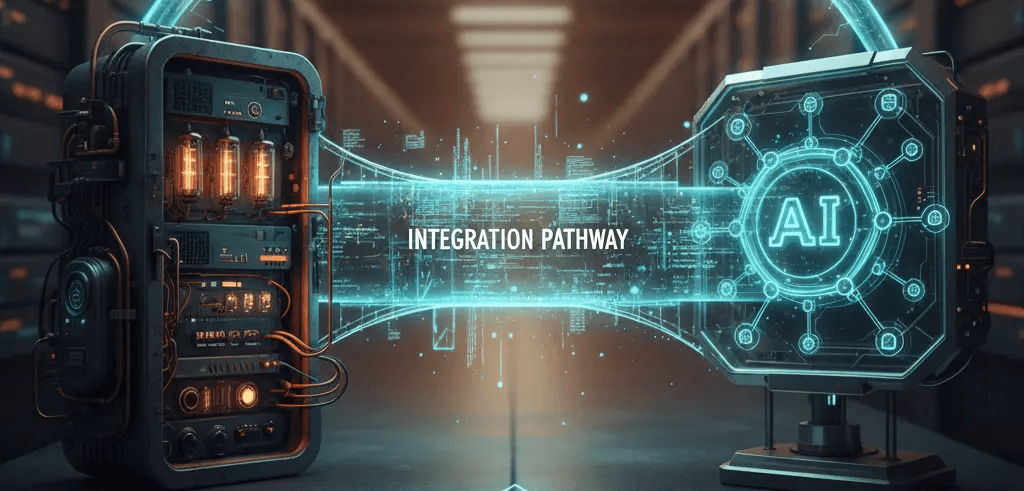
Enterprises that still rely on legacy systems for mission-critical operations are losing to the companies with flexible and adaptable approach. Whether it’s a bank running on a decades-old core platform or a hospital relying on outdated EHR systems, general perception is that upgrading is expensive and risky.
The challenge? How do you integrate AI agents—that promise automation, 24/7 intelligence, and cost savings—without disrupting daily workflows, causing downtime, or risking data loss?
This blog gives you a step-by-step playbook for safely integrating AI agents into your legacy stack.
2. Why Legacy Systems Struggle With AI Adoption
Legacy systems often face:
Rigid architectures → Not built for modern APIs.
Data silos → Scattered data sources prevent seamless AI training.
High risk of downtime → Even minor upgrades can cause outages.
Security concerns → Sensitive data can be exposed during integration.
Yet, ignoring AI adoption means losing competitive advantage. The solution is agentic AI integration with minimal disruption.
3. Key Risks: Downtime, Data Loss & Compatibility
Risk | Impact | AI Solution |
Downtime | Lost revenue, CX disruption | Parallel deployment with shadow mode testing |
Data Loss | Regulatory & compliance risks | Data backup + rollback systems |
Compatibility | Failed integrations, wasted spend | Middleware & API-based orchestration |
Enterprises must address these risks proactively before AI deployment.
4. The AI Agent Integration Roadmap (Step-by-Step)
Step 1: System Audit – Map current workflows, dependencies, and integration points.
Step 2: Define AI Use Cases – Prioritize processes where AI agents add maximum ROI (customer support, KYC, compliance monitoring).
Step 3: Deploy in Parallel (Shadow Mode) – Run AI agents alongside human systems to validate accuracy.
Step 4: API & Middleware Layer – Build connectors to ensure AI-agent-to-legacy compatibility.
Step 5: Gradual Rollout – Migrate low-risk processes first.
Step 6: Continuous Monitoring – Track uptime, error rates, and response times.
5. ROI Metrics to Track During Integration
Measuring ROI ensures stakeholders see the value of AI agent integration:
Metric | What It Measures | Why It Matters |
Call Deflection Rate | % of tasks handled by AI vs humans | Shows AI efficiency |
Downtime Reduction | Hours saved vs legacy downtime | Validates reliability |
Cost-to-Serve | Support cost per interaction | Links AI to direct savings |
CX Metrics (NPS, CSAT) | Customer satisfaction | Proves AI boosts experience |
6. Industry Use Cases
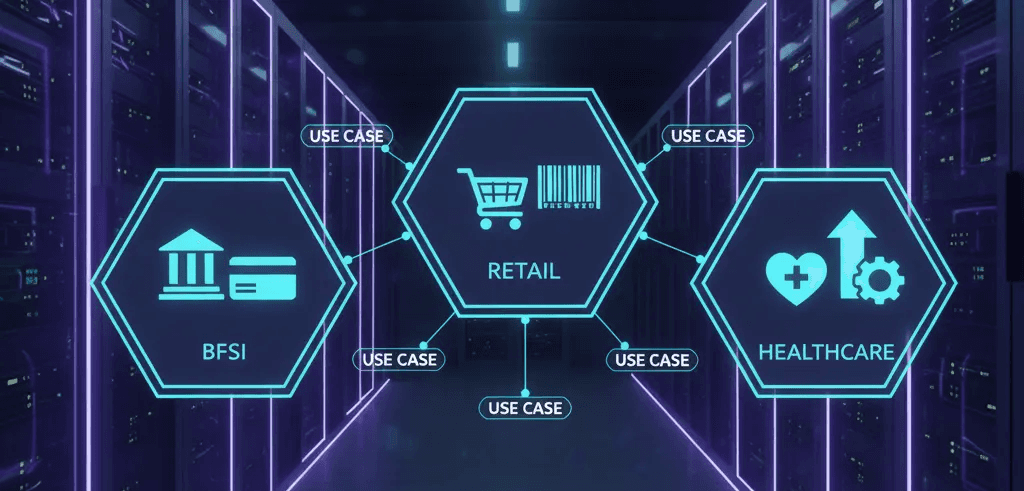
BFSI → AI agents handling loan processing while legacy systems run underwriting.
Healthcare → Voice AI scheduling patients integrated into EHR without downtime.
Retail → AI order tracking layered on top of legacy ERPs.
7. Best Practices for Zero-Disruption AI Integration
API-first architecture – Build future-proof connectors.
Run AI in shadow mode – Test without risking downtime.
Prioritize compliance – Ensure data governance frameworks.
Involve cross-functional teams – IT, compliance, and business must align.
8. FAQs
Q1: Can AI agents really integrate with 20+ year-old systems? Yes. With middleware and API bridges, AI agents can work alongside even COBOL-based cores.
Q2: What’s the biggest risk? Improper testing leading to data loss. Always back up before integration.
Q3: How long does integration take? Typical enterprise pilots take 8–12 weeks with parallel rollout.
9. Conclusion + CTA
Integrating AI agents into legacy systems no longer has to mean weeks of downtime or data risks. With the right roadmap—auditing, shadow mode deployment, API connectors, and phased rollout—enterprises can modernize safely while maximizing ROI.
🚀 Ready to integrate AI into your enterprise without downtime? Book a Demo and see how we help you unlock efficiency while keeping your legacy systems intact.
Related Posts