Explore how Intelekt AI voice agents are revolutionizing retail banking, enhancing customer satisfaction, and improving key metrics like NPS, CES and FCR.

Parul Chouhan
Chief of Staff
Remember the last time you called your bank’s toll-free number? A maze of options like “Press 1 for English, 2 for Hindi,” followed by endless menus, just to reach an agent and get a chance to “speak”. In the fast-paced 5G world, groceries often arrive faster than your chance to speak to your bank.
What about the banks? Are they aware of these experiences their customers go through? The short answer is: yes. For the longer answer, they use certain metrics to understand their customer satisfaction levels, which helps them improve through various modes, including the adoption of extensive tech, such as Artificial Intelligence (AI).
internalName: Customer Satisfaction Metrics
What Are Customer Satisfaction Metrics in Retail Banking?
Before we dive into AI's impact, let's review some of the most important customer satisfaction metrics, used across industry, not just banks:
Net Promoter Score (NPS)
This measures customer loyalty and the likelihood of recommending the bank. Leading banks like HDFC Bank have NPS scores of 54, which is lower than its global counterpart USAA (which has an NPS of 70+) but higher than the domestic banking average of 45.Customer Satisfaction Index (CSI)
This measure tracks how well banks meet customer expectations. According to the American Customer Satisfaction Index, the average score for retail banking in 2022 was 78/100.Customer Effort Score (CES)
This score indicates the ease of banking interactions. Research by Gartner suggests that 96% of customers with high-effort experiences become disloyal.First Contact Resolution (FCR)
An important efficiency metric, this shows the percentage of customer issues resolved on first contact. A 1% improvement in FCR translates to a 1% increase in customer satisfaction, according to MetricNet.
Great! Now that we're on the same page about how banks keep track of customer interactions, let’s also explore what they do to improve their scores:
Focus on Personalization
Banks use data analytics to understand customer behavior on their interfaces (phones, apps, websites, etc.) and provide personalized offers and product recommendations, improving both satisfaction and retention. Now you know why you're pre-qualified for personal loans. As per a Deloitte report, personalization increases customer engagement by 20%.Improving First Contact Resolution (FCR)
Banks invest heavily in training customer service teams to resolve issues in the first interaction, enhancing customer satisfaction and reducing follow-up calls. This effort is bolstered by multi-channel customer support, including online chat, mobile apps, and in-branch assistance.Speeding Up Transaction Times
The RBI and banks have taken active initiatives to increase automation for routine banking tasks, like money transfers or loan approvals, reducing customer wait times and improving experiences.Mobile and Online Banking Features
Continuous improvements in user-friendly mobile and online platforms ensure customers can access services easily and securely, reducing customer effort—a key factor measured by Customer Effort Score (CES).Proactive Issue Resolution
Using predictive analytics, banks identify potential problems before they arise. For example, alerting customers about potential overdrafts or offering financial advice when patterns suggest a decline in account balance can improve the overall experience and trust.
So what’s next on the cards? Applications of Artificial Intelligence in Retail Banking
AI-driven solutions are rapidly transforming the banking sector, especially in retail. AI agents, like Bank of America’s chatbot Erica or HDFC Bank’s Eva, are reducing operational costs and improving customer overall experience.
How Intelekt AI Voice Agents is Boosting Customer Satisfaction in Retail Banking
Faster Response Times with Intelekt AI Agents
In the pre-AI era, customer service response times could stretch up to an hour during peak periods. With Intelekt AI voice agents, retail banks can slash this time drastically. For instance, HDFC’s chatbot Eva handles over 5 million queries with an average response time of 0.4 seconds..Expanding Self-Service Options for Retail Bank Customers
More than 57% of banking customers now prefer using digital platforms, including AI-powered tools. Self-service options like checking balances or transferring funds reduce dependency on human agents, leading to faster, smoother transactions. Intelekt AI has seen a 35% reduction in service costs, and customer satisfaction has grown by 15%.Significant Cost Reductions in Banking Operations
In India, retail banks traditionally spend ₹200 crores annually on customer service. AI automation can reduce these costs by up to 35%, leading to annual savings of ₹50 crores for mid-sized banks (Juniper Research).Boost in First Contact Resolution (FCR) with AI
AI voice agents improve FCR by offering accurate, instant answers without human intervention. HSBC, for example, reports FCR rates as high as 90% with their AI systems. Higher FCR rates directly enhance overall customer satisfaction.Lead Qualification Costs
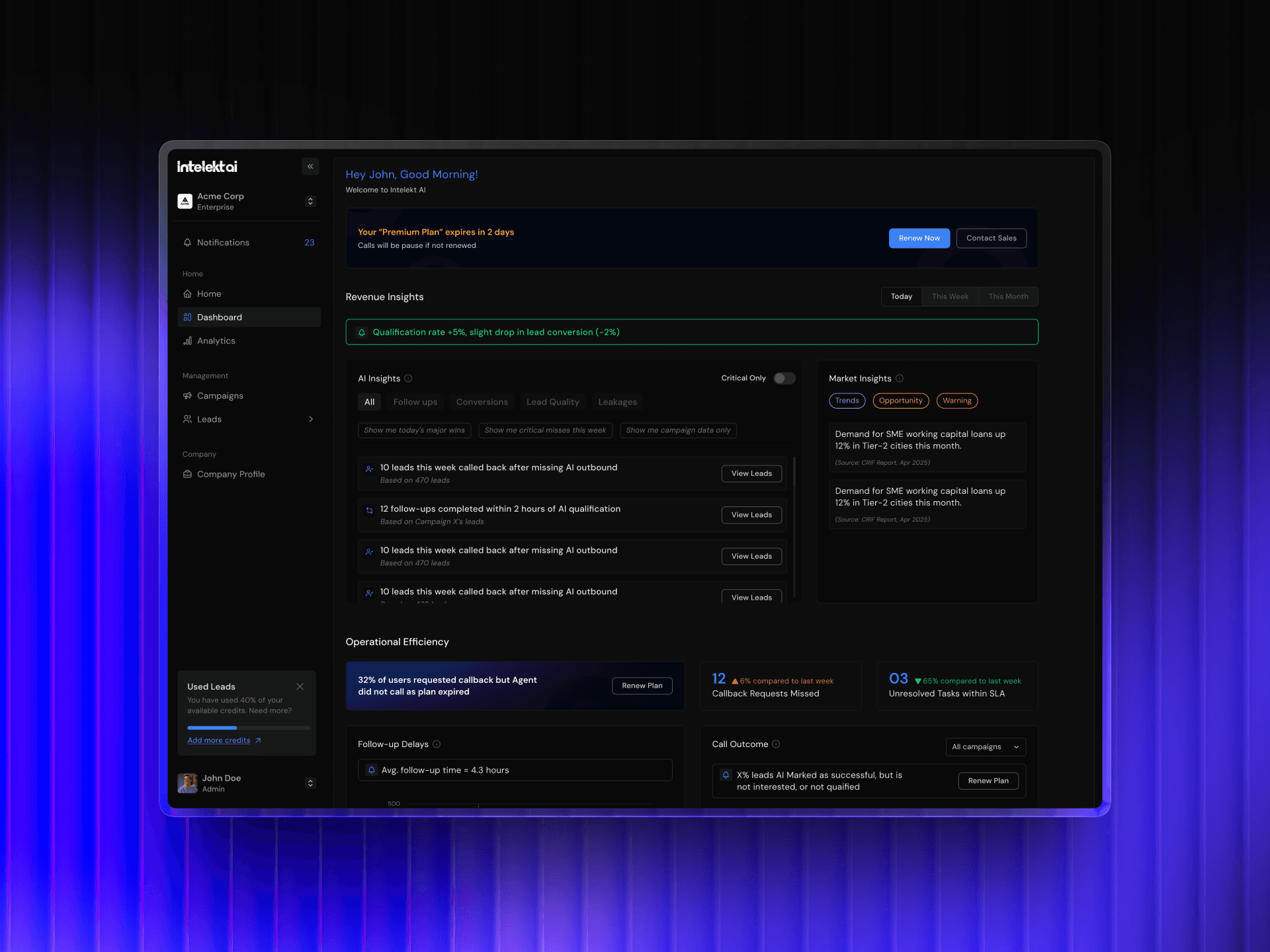
Manual lead qualification can cost retail banks up to ₹15 lakhs per campaign. Intelekt AI voice agents cut these costs by 50%, providing a faster, more efficient way to identify and qualify leads.Agent Hiring & Training Costs
Training customer service agents can cost banks up to ₹4 lakhs per agent annually, with average training periods lasting 3 months. AI reduces reliance on human agents, cutting these costs by over 60%.
Retail banks are increasingly adopting conversational AI to enhance customer service and reduce operational costs. AI voice agents are expected to save banks $7.3 billion globally by 2027, revolutionizing how banks approach customer service.
As banks continue to invest in AI, we can expect even more seamless, personalized, and efficient experiences. This trend will likely lead to more complex queries being handled by AI, further improving customer satisfaction metrics like CES and NPS.
AI voice agents are more than just a tech trend; they are fundamentally reshaping the retail banking industry. By speeding up response times, offering personalized services, and reducing operational costs, retail banking is going through significant shifts in their current metrics and is poised to do bring major changes across industries. Maybe introducing even more industry specific and data-driven metrics is on the card. Who’s to say?
For retail banks, adopting AI voice agents isn’t just about keeping up with technological advancements—it’s about staying ahead in customer service.
Curious how Voice AI can help your business? Schedule a demo with us today!
Frequently Asked Questions
Q1: What metrics do retail banks use for customer satisfaction?
A1: Retail banks primarily use Net Promoter Score (NPS), Customer Satisfaction Score (CSAT), and Customer Effort Score (CES) to measure customer loyalty and satisfaction levels.
Q2: How do Intelekt AI voice agents enhance customer service?
A2: AI voice agents offer 24/7 service, quick response times, and reduced wait times, improving customer satisfaction by up to 30%, according to industry studies.
Q3: How does Intelekt AI impact First Contact Resolution (FCR)?
A3: AI voice agents improve FCR rates by 20-30%, resolving customer queries more effectively without human intervention.
Q4: How do Intelekt AI voice agents improve lead qualification in retail banking?
A4: Intelekt AI voice agents automate up to 50% of lead qualification tasks, helping banks identify viable customers faster and reduce manual effort.
Related Posts